
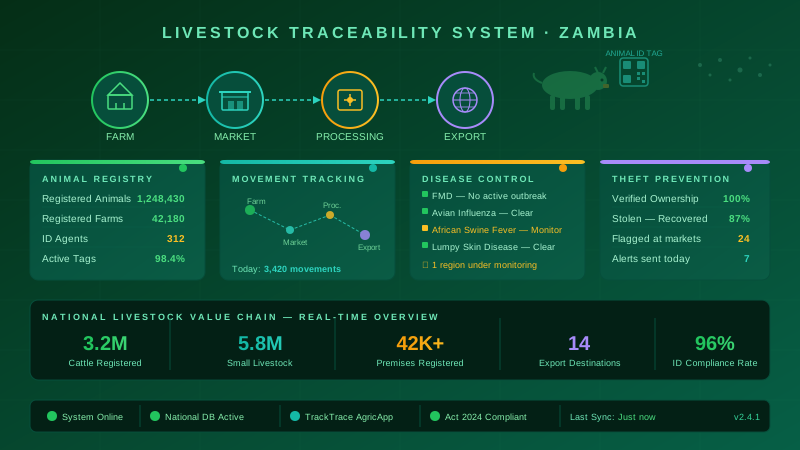
Zambia has taken a major step toward modernizing its livestock sector through the Animal Identification and Traceability Act, 2024. This law establishes a national system to identify animals and track them throughout the livestock value chain — from farms to markets, slaughterhouses, and exports.
The Act aims to strengthen livestock management, improve disease control, reduce livestock theft, and enhance Zambia's access to international markets. To support the implementation of this law, a digital platform has been developed that is fully aligned with the objectives of the Act.
Featured Platform
TrackTrace Agriculture Web Application
Developed to support the implementation of the Animal Identification and Traceability Act, 2024 by digitizing livestock identification, tracking animal movements, and providing authorities with a national livestock database.
Why Zambia Introduced the Animal Identification and Traceability Act
The previous Animal Identification Act of 2010 was considered limited because it did not provide a comprehensive framework for tracking animals and animal products across the entire value chain. The new legislation addresses these gaps by introducing a modern traceability system that:
- ✓Establishes the Animal Identification and Traceability Unit
- ✓Creates a national animal identification and traceability system
- ✓Registers animal identification marks and agents
- ✓Tracks animals, animal products, and animal by-products
- ✓Replaces the outdated legal framework of the 2010 Act
The Role of the Animal Identification and Traceability Unit
The Act establishes a specialized Unit within the veterinary services department responsible for livestock. The Unit becomes the central authority responsible for tracking animals across Zambia.
- ›Designing and managing the national traceability system
- ›Registering animals and livestock premises
- ›Issuing identification marks and certificates
- ›Maintaining a national livestock database
- ›Coordinating with government agencies and stakeholders
Why Digital Systems Are Critical for Implementation
Managing millions of animals across thousands of farms and markets cannot be done efficiently using paper-based systems. A digital traceability platform provides the infrastructure required to implement the law at scale. The TrackTrace Agriculture Web Application was developed to support this transformation by digitizing the processes described in the Act.
Complete Value Chain Coverage
How the TrackTrace System Supports the Law
National Registration of Livestock
How It Works
The platform allows authorities to register livestock owners, farms and premises, animal identification marks, and animal identification agents. Each animal or group of animals receives a unique identification mark, allowing them to be tracked across their lifecycle — creating a national digital livestock registry.
Key Outcomes
- ✓Register every livestock owner and farm
- ✓Issue unique identification marks to animals
- ✓Maintain a digital registry of all ID agents
- ✓Create a verified national livestock database
Tracking Animals from Birth to Market
How It Works
The Act requires that animals be identifiable and traceable throughout their lifecycle. The system enables registration of animals at birth, recording of animal movements between farms, tracking of animals transported to markets, and recording of animals sent to slaughterhouses — creating a complete digital history for every animal.
Key Outcomes
- ✓Register animals at birth with unique IDs
- ✓Record every movement between farms
- ✓Track animals transported to markets
- ✓Maintain complete lifecycle records
Monitoring Animal Products and By-Products
How It Works
Traceability does not stop at the farm. The law also requires the traceability of meat and animal products, animal by-products, and processed livestock goods. The system allows regulators to track products from farm through transport, processing, and retail — improving food safety and quality assurance.
Key Outcomes
- ✓Track meat and products from farm to retail
- ✓Monitor animal by-products and processed goods
- ✓Ensure food safety across the supply chain
- ✓Enable rapid product recall when necessary
Strengthening Disease Control
How It Works
Livestock diseases can spread quickly if animals are not properly tracked. With a digital traceability system, authorities can quickly identify the origin of infected animals, trace all farms that had contact with those animals, isolate affected areas, and prevent further spread of disease — critical for controlling FMD, African Swine Fever, and Avian Influenza.
Key Outcomes
- ✓Trace the origin of infected animals instantly
- ✓Identify all contact farms and movements
- ✓Isolate outbreak areas with precision
- ✓Prevent disease spread before it escalates
Reducing Livestock Theft
How It Works
Livestock theft is a major challenge in many rural areas. With the system, every animal is registered with a unique identifier and ownership records are stored digitally. Stolen animals can be traced when they appear in markets or slaughterhouses — greatly reducing opportunities for livestock theft and improving rural livelihoods.
Key Outcomes
- ✓Every animal carries a unique digital ID
- ✓Ownership records are tamper-proof
- ✓Stolen animals flagged at markets
- ✓Improve rural security and farmer confidence
Supporting Export Markets
How It Works
International livestock markets require strong traceability systems. Countries importing meat often require proof of animal origin, disease control compliance, and production standards. A digital traceability system allows Zambia to meet international standards and expand livestock exports — opening new revenue streams for farmers and the national economy.
Key Outcomes
- ✓Prove animal origin for export certification
- ✓Demonstrate disease-free status to importers
- ✓Meet international production standards
- ✓Unlock new export markets for Zambian livestock
Data-Driven Livestock Policy
How It Works
The system also provides government with valuable data including national livestock population statistics, regional livestock distribution, disease outbreak patterns, and production trends. This data supports better agricultural policy decisions, informed budget allocation, and evidence-based planning for the livestock sector.
Key Outcomes
- ✓Track national livestock population in real time
- ✓Map regional distribution and production trends
- ✓Monitor disease patterns across the country
- ✓Support evidence-based agricultural policy
Disease Threats Addressed
With a digital traceability system, authorities can quickly contain outbreaks by tracing the movement history of every animal — limiting the spread of disease across farms, markets, and provinces.
A Digital Future for Zambia's Livestock Sector
The Animal Identification and Traceability Act, 2024 represents a forward-looking reform aimed at modernizing Zambia's livestock industry. However, the success of this law depends on having the right digital infrastructure to implement it effectively.
By combining policy, technology, and data, Zambia can build a modern livestock ecosystem that supports farmers, strengthens food security, and contributes to economic growth.
- ✓Digitizing livestock identification across the nation
- ✓Strengthening disease control and rapid response
- ✓Improving food safety from farm to retail
- ✓Reducing livestock theft in rural communities
- ✓Enabling international livestock trade and export growth
From farm to fork, every animal has a story.
Digital traceability makes that story verifiable.
Supporting Zambia's Animal Identification and Traceability Act, 2024 with technology.