
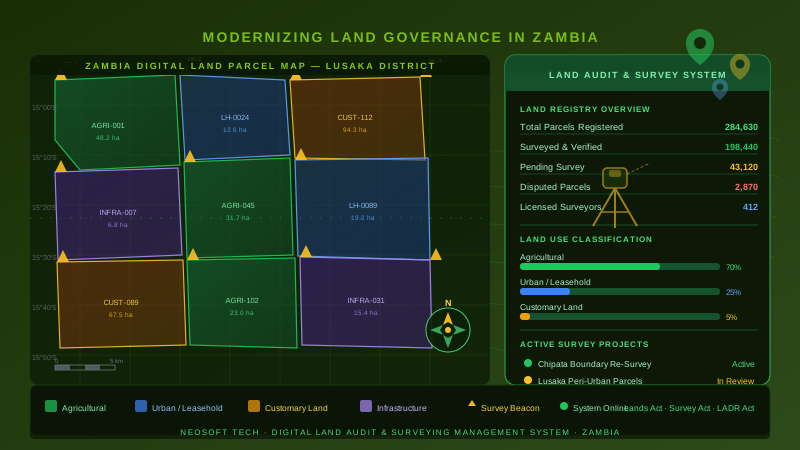
Land is one of Zambia's most valuable national resources. It supports agriculture, housing, infrastructure development, mining, and economic investment. Proper management of land therefore plays a critical role in national development.
As the demand for land increases, governments around the world are realizing that traditional paper-based systems are no longer sufficient to manage land efficiently and transparently. Two complementary digital platforms now provide the foundation for modern land governance in Zambia.
Two Digital Platforms for Modern Land Management
Featured Platform
Land Audit and Management System
A centralized platform that allows government institutions to monitor and audit land ownership and land use across Zambia. The system helps officials maintain a digital registry of land allocations, monitor ownership records, and identify idle or underutilized land.
View DemoFeatured Platform
Digital Surveying Management System
A platform that digitizes the process of managing surveying activities — from registration of licensed surveyors to digital submission of survey diagrams, tracking of surveying projects, and management of survey beacons and boundary markers.
View DemoThe Legal Foundation of Land Management in Zambia
Land administration in Zambia is guided by important legislation designed to ensure transparency, accountability, and orderly development.
Governs land tenure, allocation of land, and conversion of customary land into leasehold. Confirms land is vested in the President on behalf of the people of Zambia.
Regulates how surveys are conducted, licenses surveyors, governs preparation of land diagrams and survey plans, and protects survey beacons.
Governs the registration of land titles and deeds, ensuring that land ownership and transactions are properly documented and legally protected.
The Challenge: Fragmented Land Data
Despite strong legislation, many land administration systems still face operational challenges. In many cases, land records exist in multiple offices across ministries, councils, and survey departments — making it difficult to obtain a complete picture of land ownership and utilization.
- ✗Fragmented land records spread across multiple ministries and councils
- ✗Slow verification of land ownership causing delays in transactions
- ✗Disputes over land boundaries due to missing or inaccurate survey records
- ✗Limited visibility into land allocations across provinces and districts
- ✗Difficulties auditing land usage and identifying underutilized parcels
Digital Land Auditing: Four Core Capabilities
The Land Audit and Management System provides a centralized platform that transforms how government institutions monitor and manage land across the country.
Digital Registry of Land Allocations
How It Works
The system creates a centralized, searchable digital registry capturing all land allocations across provinces and districts. Each parcel is recorded with its title number, owner, size, location, and tenure type — giving government a complete picture of national land distribution.
Key Outcomes
- ✓Single source of truth for all land records
- ✓Eliminate duplicate and conflicting records
- ✓Enable cross-ministry data sharing
- ✓Support transparent allocation decisions
Land Ownership Monitoring
How It Works
Officials can monitor land ownership records in real time, verifying allocations across provinces and tracking conversion of customary land into leasehold tenure — a process governed by the Lands Act.
Key Outcomes
- ✓Verify ownership before new allocations
- ✓Track land tenure conversions
- ✓Identify undocumented land holdings
- ✓Reduce fraudulent ownership claims
Land Use Auditing
How It Works
The audit module allows government to monitor whether allocated land is being developed and used in accordance with national priorities. Officials can flag idle land, track development progress, and identify parcels that have been allocated but remain undeveloped.
Key Outcomes
- ✓Identify idle and underutilized land
- ✓Monitor compliance with development conditions
- ✓Recover undeveloped land for reallocation
- ✓Support enforcement of Lands Act obligations
Detection of Irregular Allocations
How It Works
By cross-referencing land records across institutions, the system can identify overlapping allocations, parcels allocated without following due process, and patterns of irregular land distribution — strengthening accountability in land administration.
Key Outcomes
- ✓Flag overlapping land allocations
- ✓Identify allocations lacking legal documentation
- ✓Generate audit reports for oversight bodies
- ✓Strengthen anti-corruption safeguards
Digital Survey Management: Four Core Capabilities
Accurate land surveys are essential for preventing land disputes and ensuring secure property rights. The Surveying Management System digitizes the full process of managing surveying activities in compliance with the Land Survey Act.
Surveyor Registration and Licensing
How It Works
The system maintains a digital register of all licensed surveyors in Zambia, consistent with the requirements of the Land Survey Act. It tracks licensing status, qualifications, and active assignments.
Key Outcomes
- ✓Ensure only licensed surveyors undertake official work
- ✓Monitor surveyor activity and compliance
- ✓Manage licensing renewals digitally
- ✓Build a national surveyor database
Digital Survey Plan Submission
How It Works
Surveyors can submit land diagrams and survey plans digitally, replacing paper-based submissions. Plans are validated, stored, and linked directly to the parcel records in the land registry — creating an unbroken chain from survey to title.
Key Outcomes
- ✓Reduce delays in plan approval
- ✓Eliminate lost or damaged paper records
- ✓Enable faster land titling
- ✓Maintain permanent digital survey archive
Survey Beacon Management
How It Works
The Land Survey Act places legal obligations on the protection of survey beacons and boundary markers. The system tracks beacon locations, condition, and inspection records — making it easier to detect and respond to beacon disturbance or removal.
Key Outcomes
- ✓Protect the integrity of land boundaries
- ✓Reduce boundary disputes
- ✓Enable faster dispute resolution
- ✓Comply with Survey Act beacon obligations
Data-Driven National Land Planning
How It Works
With digital land audit and survey data integrated, government planners gain access to accurate land information across provinces — supporting decisions on agriculture, housing, infrastructure development, and economic investment zones.
Key Outcomes
- ✓Inform national development planning
- ✓Identify land available for infrastructure
- ✓Support agricultural land use policy
- ✓Enable evidence-based land allocation
Reducing Land Disputes Through Better Data
Land disputes often arise because of unclear boundaries, missing survey records, overlapping land allocations, and poor documentation of ownership. Digital survey records make it easier to:
Supporting National Development Planning
Land information is essential for national planning. With digital land audit and surveying systems, government officials can access data to make better decisions about land allocation for agriculture, housing, industry, and public infrastructure.
- ✓Land distribution data across all provinces
- ✓Agricultural land utilization mapping
- ✓Urban land development patterns
- ✓Availability of land for infrastructure projects
- ✓Identification of investment zones
Digital Land Governance Chain
Digital systems create an unbroken accountability chain from survey to parliamentary oversight.
By integrating the Land Audit System and the Survey Management Platform, Zambia can build a modern digital ecosystem that protects property rights, supports economic development, and ensures responsible management of the country's most valuable resource — land.